
I am deeply grateful to the Robert Anderson Trust for granting me the invaluable opportunity to return to London in November 2024 to continue my research for my forthcoming Catalogue of the Karnak Terracotta Figurines in Front of the 1st Pylon (2011–2013). This second research trip proved to be highly productive and instrumental in advancing my study.
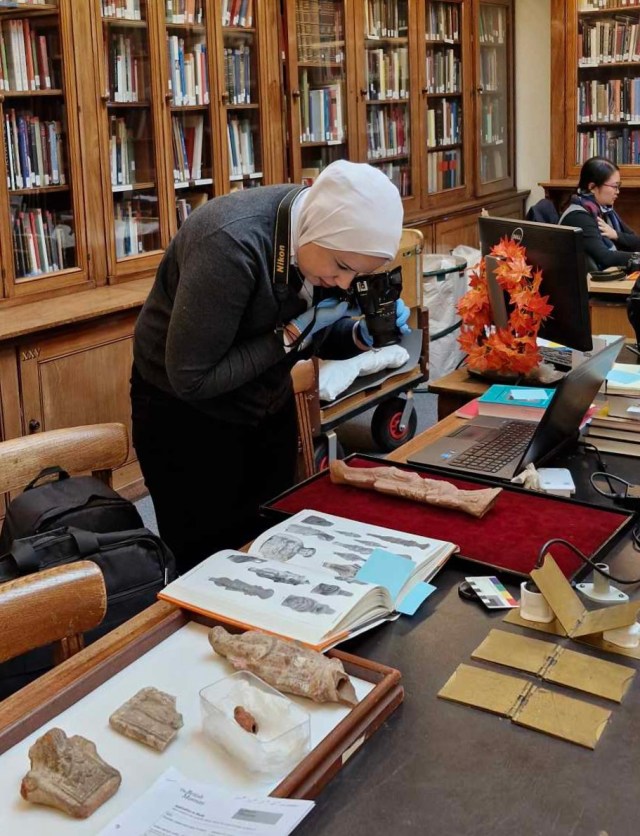
In the study room of the Graeco-Roman Department at the British Museum.
During this visit, I focused on examining material from the British Museum and the Petrie Museum, which greatly enriched my research. At the British Museum’s Graeco-Roman Department, I meticulously studied a group of terracotta figurines from Naukratis. These artifacts provided crucial comparative insights into the terracotta figurines uncovered during the Karnak excavation. The craftsmanship, iconography, and cultural significance of the Naukratis figurines offered valuable parallels that will enhance the analysis and interpretation of the Karnak collection.
Additionally, my work at the Petrie Museum allowed me to examine another group of terracotta figurines, most of which were originally collected or discovered by Flinders Petrie. These artifacts, particularly the baked clay plaque of a standing nude woman from Memphis, proved to be essential for my comparative study. The detailed observations from these terracotta figurines will directly inform my cataloguing and provide a broader understanding of their cultural and chronological context.
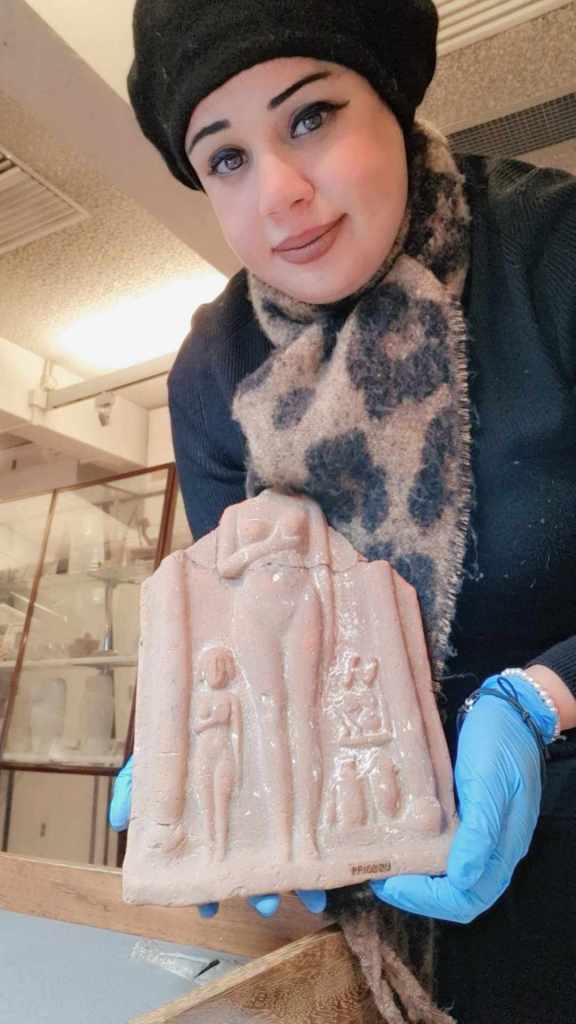
With the baked clay plaque from the Petrie Museum.
The extensive library resources at both the British Museum and UCL were also pivotal to my research. The Greco-Roman Library at the British Museum provided access to specialized catalogs and literature on terracotta figurines, which were invaluable for citations and contextual analysis. Similarly, the comprehensive resources at the UCL Library supported my study with additional academic references and critical perspectives.
This trip was exceptionally fruitful and intensive, enabling me to finalize significant portions of my catalog. I am confident that the progress made during this period will facilitate the publication of the Catalogue of the Karnak Terracotta Figurines in 2025, marking a significant milestone in my academic journey.
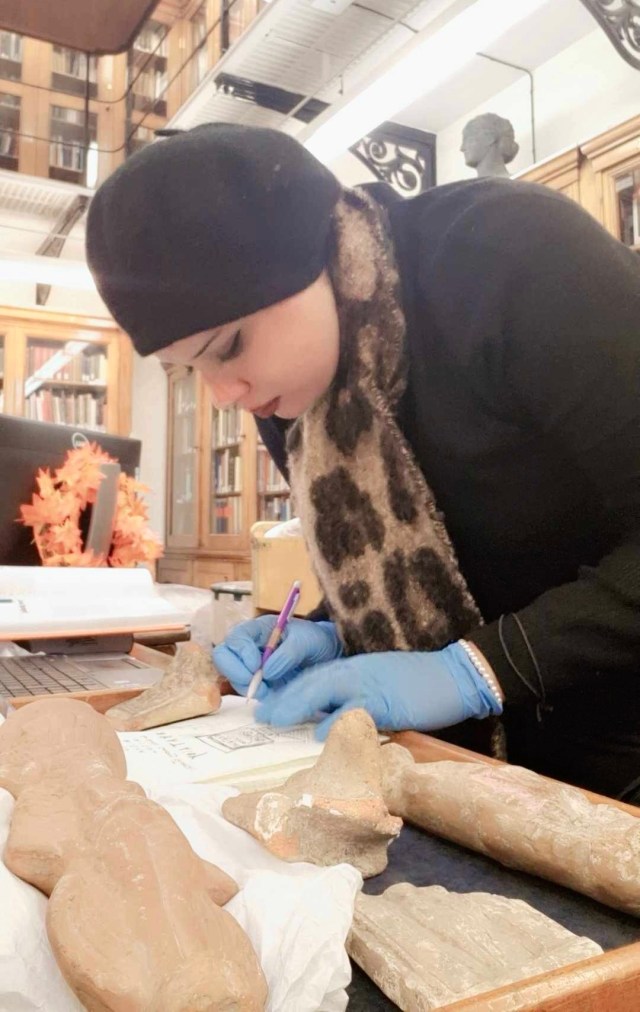
Drawing figurines in the British Museum.
I would like to extend my heartfelt thanks to the staff of the British Museum and the Petrie Museum for their prompt assistance and unwavering support, as well as the UCL Library staff for their excellent organization and helpful guidance.
Lastly, I am profoundly grateful to Dr Chris Naunton, Director of the Robert Anderson Trust, whose dedication and efforts ensured the success of this enriching research experience.
This second trip has been transformative, providing the resources, support, and environment necessary to bring my research closer to completion. The opportunity to engage with such significant collections and resources has been instrumental in shaping the trajectory of my academic work.
 The Robert Anderson Trust