
Shaimaa, a doctoral student of Cairo University, Egypt visited the UK in October 2025 to carry out research for her thesis on ‘A Collection of Mummy Bandages in the World Museum of Liverpool’.
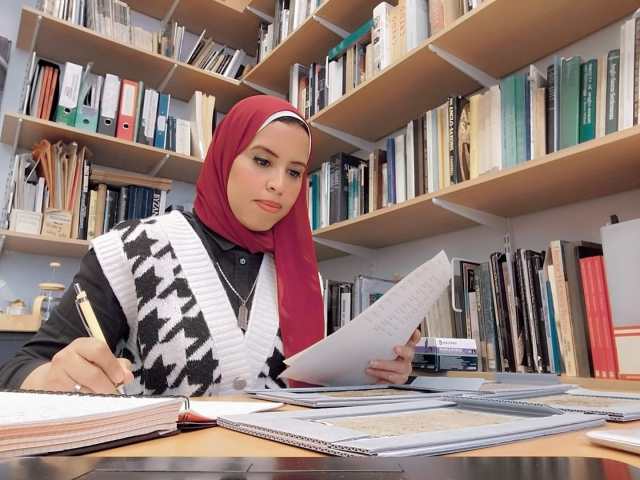
Shaimaa examining the Mummy bandages in the World Museum, Liverpool
I would like to express my deep appreciation and gratitude to the Robert Anderson Trust for granting me the opportunity to undertake an intense one-month research residency in London.
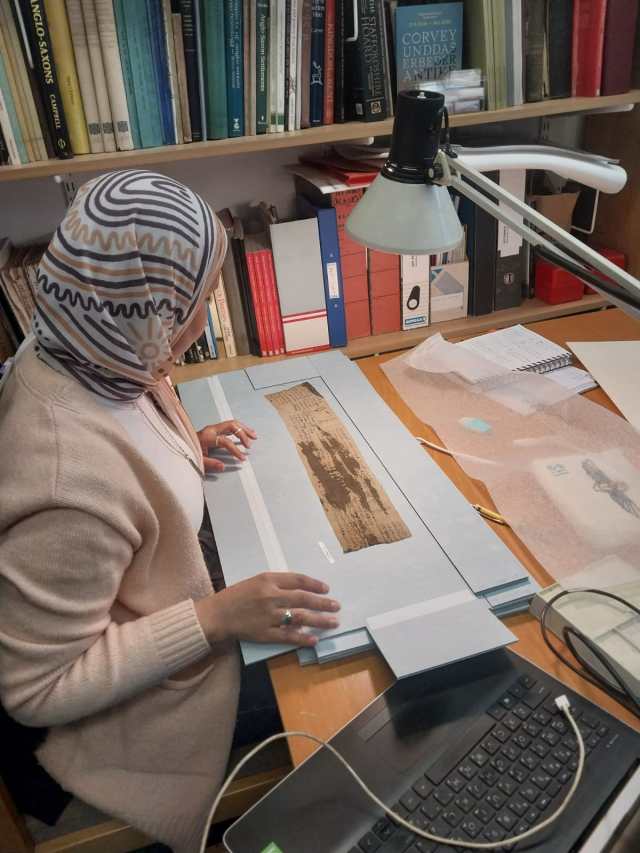
In the World Museum, Liverpool
This remarkable and productive research visit was important to my doctoral thesis titled “A Collection of Mummy Bandages in the World Museum of Liverpool,” since it allowed me to inspect the mummy bandages in person. The direct examination of the bandages, with the book of the Dead inscriptions, provided insights and observations that would not have been accessible through remote image analysis only, thereby notably enriching my understanding of the subject.
I contacted the museums that house the objects for my study, first the World Museum of Liverpool, which holds the largest number of core objects. In addition, the British Museum and Petrie Museum of Egyptian and Sudanese Archaeology contain related objects. During my stay in London, I visited the study room of the British Museum of Egypt and Sudan to examine a list of bandages, as well as the British Museum Library to consult some references. I would like to thank the BM team for facilitating my work, especially Dr Marie Vandenbeusch, Curator: Funerary Culture of the Nile Valley, Department of Egypt and Sudan.
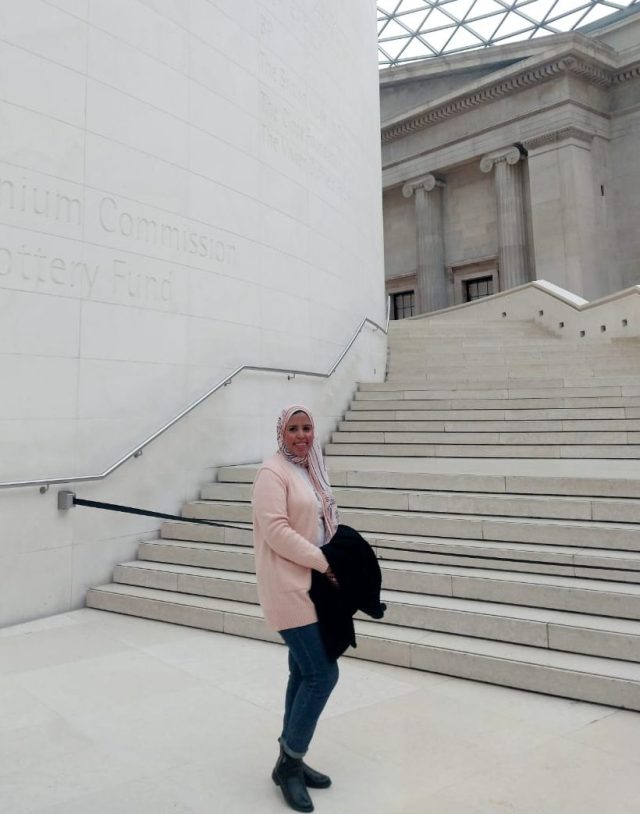
In the Great Court at the British Museum
I also visited the Petrie Museum of Egyptian and Sudanese Archaeology, and I wish to thank Catriona Wilson, Head of the Petrie Collection of Egyptian and Sudanese Archaeology; Anna Garnett, Curator; and Lisa Randisi, Curatorial and Collections Assistant, who assisted me greatly throughout the process from the study request to my visit. They were all very kind and helpful.
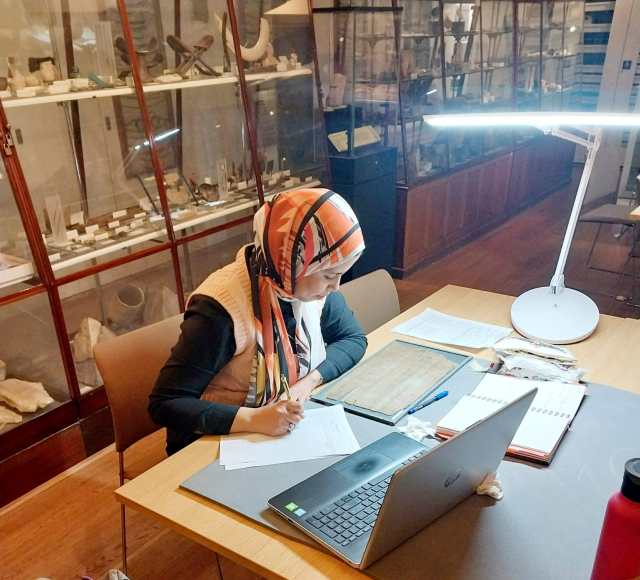
Examining the Mummy bandages in the Petrie Museum of Egyptian and Sudanese Archaeology
Furthermore, I would like to sincerely thank Dr Ashley Cooke, Head of World Museum of Liverpool, for his support from the very beginning of the selection process. He has been incredibly helpful ever since I first encountered the collection on the website up to my visit to the Museum.
This opportunity allowed me to closely examine the texts that were unclear in the images, which made a significant difference to my research, particularly for the palaeographic study. In addition, I have examined the woven fabrics’ colour and quality.
For more information about the other students in the 2025 cohort please see here.
 The Robert Anderson Trust