
Thanks to the generous support of the Robert Anderson Trust, I was able to spend one month in London in July 2025 to conduct research for my PhD thesis entitled ‘Egyptological Collections and European Politics – How Acquisition Policies of European Museums Were Influenced by Political Events Between 1882 and 1918′.
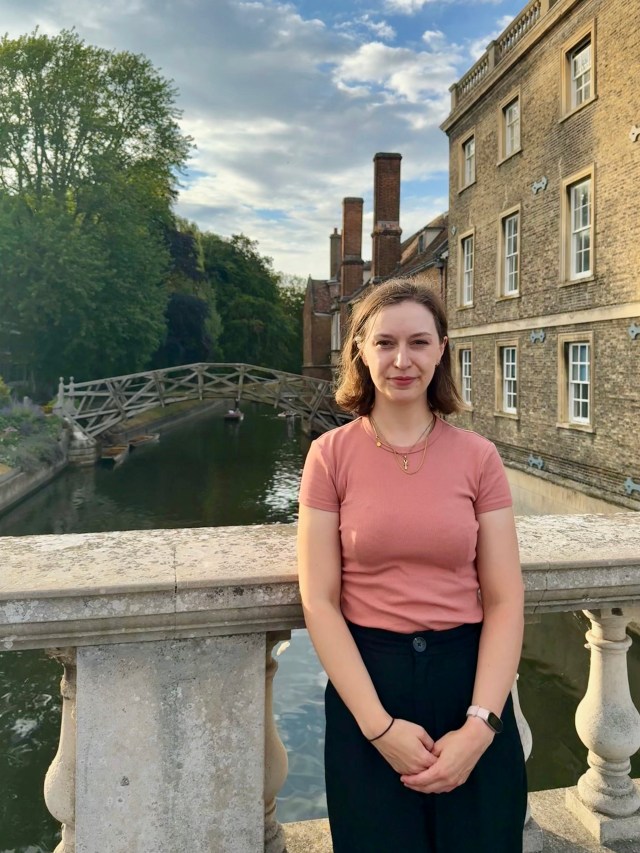
Taken on a weekend trip to Cambridge, where I was able to see the Egyptological collection of the Fitzwilliam Museum
During my stay in London, I concentrated primarily on archival work at the British Museum. My main focus was on acquisitions of Egyptian objects between the beginning of British control in Egypt and the end of the First World War. I spent most of my time working with the microfilm reader in the Museum’s Central Archive, starting with the indexes of the Trustees’ Minutes. I searched for records relevant to my research, including collections or objects offered for sale by collectors in Europe and Egypt, antiquities dealers and intermediaries, as well as direct acquisitions made by the department’s keepers. These records also contained valuable information on the political situation in Egypt, contemporary antiquities laws, and the Museum’s annual acquisition budgets.
Once I had identified relevant entries, I consulted the corresponding records in the Trustees’ Minutes files and, in some cases, the attached original papers. In addition, I examined correspondence from the Department of Egypt and Sudan dating from the late 19th and early 20th centuries. I was particularly interested in letters exchanged between keepers and antiquities dealers, which shed light on why certain objects were considered desirable while others were not acquired.
This work would not have been possible without the generous assistance of archivist Laura Hayley and Dr Patricia Usick, who provided invaluable advice and support. I also had the pleasure of meeting curator Dr Kelly Accetta Crowe, who kindly provided me with digital object lists as well as helpful insights (and affordable coffee!). I am deeply grateful to all three for their aid.
Beyond my work at the British Museum, I visited the Lucy Gura Archive of the Egypt Exploration Society, where I examined early correspondence, particularly regarding the Society’s relationship with the British Museum. My research there was greatly facilitated by Collection Manager Elisabeth Owen. In addition, I spent a study day at the British Library and was invited by Prof Mark Nesbitt to Kew Gardens to examine plant remains from Ancient Egypt. I am especially grateful to Mark for taking the time to show me around, providing me with several books, and offering valuable advice on the future of my academic career.
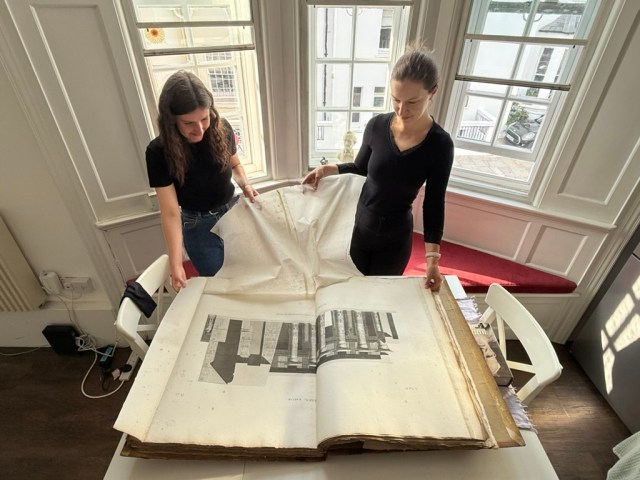
Examining the Description de l’Égypte with fellow July visitor, Nolwenn Riaux
I greatly benefited as well from the library of the Trust’s house in Kensington, where I was fortunate to reside. It provided not only excellent evening reading but also essential publications for my research. Kensington House offered further treasures: together with Chris Naunton and the second July visiting scholar, Nolwenn Riaux, I had the rare opportunity to study the second edition of the Description de l’Égypte. Another highlight was the Trust’s summer concert at Leighton House, where we enjoyed a wonderful performance by some of the scholars supported by the Trust and had the chance to meet Trustees as well as former friends and colleagues of Robert Anderson.
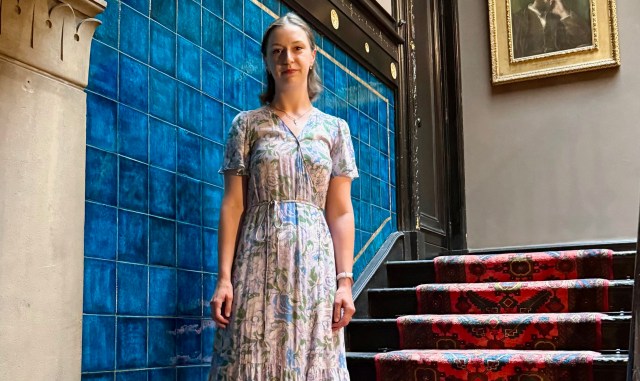
At Leighton House for the Trust’s summer concert
I wish to express my heartfelt thanks to the Robert Anderson Research Charitable Trust and Dr Chris Naunton for making this research stay possible. It was a true privilege to live at the house, to exchange ideas about Egyptology with fellow scholars, and to make substantial progress in my doctoral research. I will always remember this month with great gratitude and fondness.
For more information about the other students in the 2025 cohort please see here.
 The Robert Anderson Trust