
Jaume visited London in April 2023 and conducted research for his PhD thesis on ‘‘Non-stola yellow coffins of the Twenty-First Dynasty: Identification of models, workshops and individual craftspeople’, studying materials at various museums in the UK. For a full list of scholars awarded places to carry out research in London in 2023, please see here.
I’m excited to share my experiences from my research stay in London. In April 2023, I had the opportunity to focus on examples of non-stola yellow coffins from the late New Kingdom to the end of the Twenty-First Dynasty, which are preserved in several museums in the UK, including at the British Museum in London, the Ashmolean Museum in Oxford, and the Fitzwilliam Museum in Cambridge.
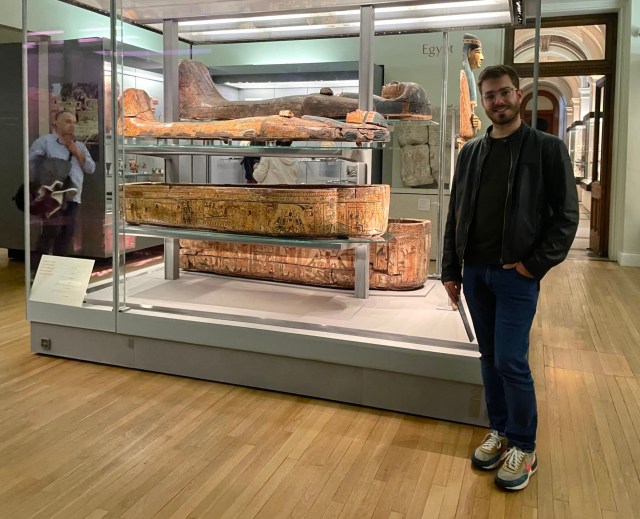
Jaume at the Fitzwilliam Museum in Cambridge, standing next to the yellow coffin of Nespawershefyt which he was able to study during his visit to the museum.
I spent the majority of my time at the British Museum, which preserves the largest number of yellow coffins in the UK. My PhD research project is titled “Non-stola yellow coffins: Identification of workshops and individual craftspeople”. My research objectives at the Museum included closely examining, documenting, and studying the iconography and inscriptions on these coffins, identifying their origins, workshops, and the skilled craftspeople responsible for their creation. Additionally, I aimed to explore the cultural and social significance of the texts and images adorning the materials. To achieve these goals, I also had the privilege of accessing rich bibliographic sources and documents associated with the yellow coffins at both the British Museum and the University College London (UCL). I also sought guidance from renowned experts in the field, engaging in discussions and consultations.
Conducting computer-aided comparative analyses, I compared these coffins with others in various collections, including those preserved at the Ashmolean Museum in Oxford and the Fitzwilliam Museum in Cambridge, which I had the opportunity to visit during my stay in London. These museums provided valuable insights into the chronologies, workshops, and origins of the coffins.
During my research stay, I also consulted the archival materials preserved at the British Museum, identifying previously unknown documents associated with some of the coffins. These documents shed light on the modern history of the coffins, which still contain many unknown components. The in-depth study of these new documents will reveal previously unknown information about how these objects arrived in London in modern times, providing fascinating insights into the journey of the yellow coffins from their original resting place to their current home. As a result of my research stay, my understanding of the non-stola yellow coffins has grown.
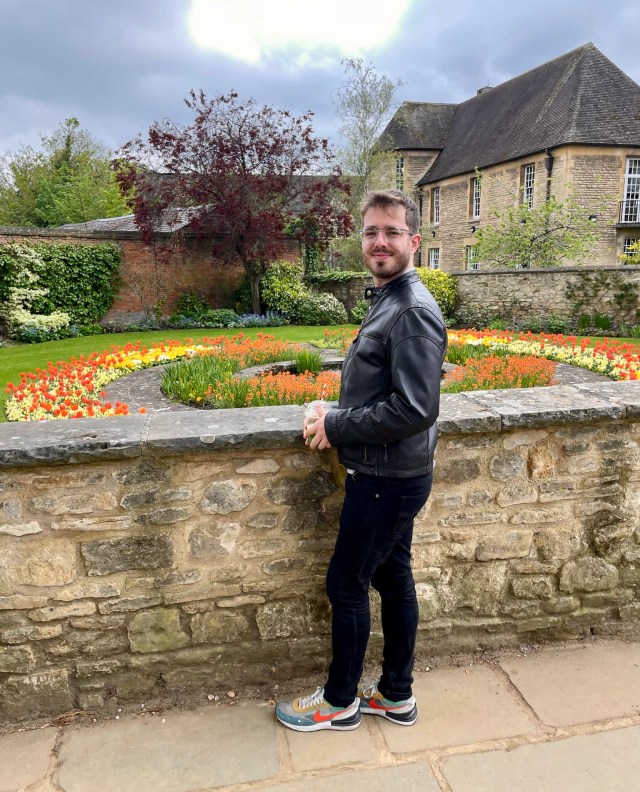
Jaume walking through a beautiful garden in front of Christ Church College, Oxford during his visit.
Throughout my time in the London and the UK, I engaged in a range of exciting activities. During my free time, I had the pleasure of exploring the vibrant city of London. I also had the opportunity to immerse myself in the vast Egyptological collections at the British Museum and the Petrie Museum, experiencing their awe-inspiring exhibitions and artifacts. Other museums, with their rich collections and captivating exhibitions, served as constant sources of inspiration. Additionally, I enjoyed leisurely walks through the city’s public gardens, appreciating the beauty of the surroundings. The pleasant spring weather during my stay enhanced my overall experience.
My research stay in London was a truly enriching experience. I would like to extend a special note of gratitude to Dr. Chris Naunton for his invaluable support and guidance during my time in the city. I am genuinely thankful for the opportunity. Additionally, I deeply appreciate the warm hospitality I received while residing at Kensington House, where the comfortable accommodations and friendly flatmates provided an ideal home base throughout my stay. The house’s library, filled with a marvellous collection of books, including the second edition of the Description de l’Égypte (!), was a fantastic resource that offered a quiet and inspiring environment for my studies.
The scholarship that made this research stay possible marks a significant milestone in my research, and I am truly grateful for the support that enabled me to advance my research and academic pursuits. I also extend my gratitude to everyone involved in making my research stay a truly unforgettable and fulfilling experience. I am delighted to now be a part of the Kensington House community and I strongly encourage all young researchers to consider applying to the Trust.
 The Robert Anderson Trust